VGO (FCC feed) mild hydrocracking:
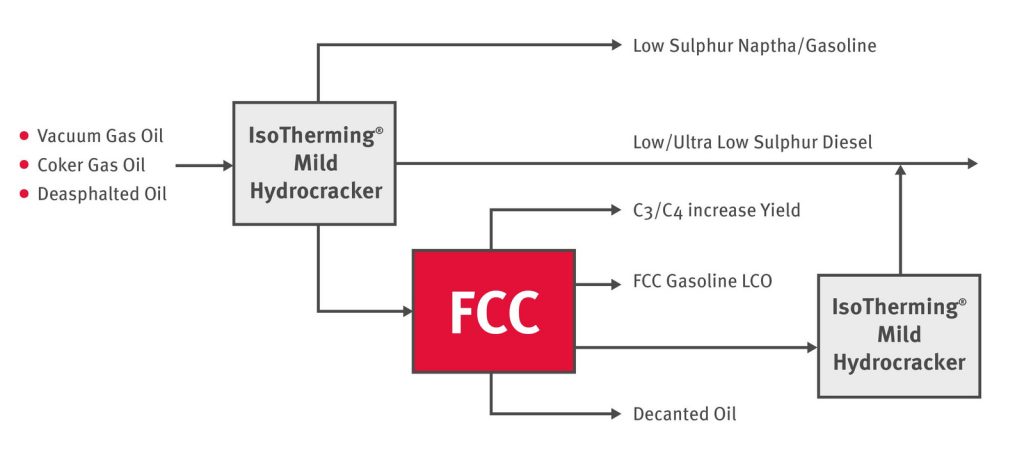
When used upstream of the refinery Fluid Catalytic Cracker (FCC), MHC provides a profitable minimal investment route to achieve incremental vacuum gas oil (VGO) conversion while producing high quality, low-sulfur fuels (Oil & Gas Journal online, June 2002).
MHC upstream of the FCC:
LCO (FCC product) mild hydrocracking:
When used downstream of the refinery FCC unit, MHC upgrades light cycle oil (LCO), a product typically destined for fuel oil and converts it to more profitable low or ultra-low sulfur diesel (ULSD).
MHC downstream of the FCC:
Mild Hydrocracking (MHC) is catalytic cracking in the presence of hydrogen and operating at “mild” hydrogen partial pressures (in comparison to conventional hydrocracking). Unlike hydrotreating, where hydrogen is used to break C-S and C-N bonds, mild hydrocracking uses hydrogen to break C-C bonds.
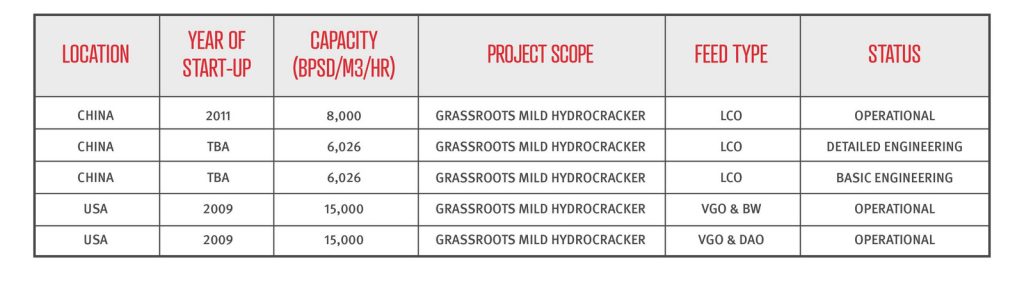
One of the unique advantages the IsoTherming® technology brings to the marketplace is the upgrading of FCC Light Cycle Oil (LCO) applications. A niche market has developed for mild hydrocracking of LCO as it takes a product typically destined for fuel oil and converts it to a more profitable product, low-sulfur (50 ppm) or ultra-low sulfur diesel product (10 ppm sulfur or less). Elessent Clean Technologies has licensed five IsoTherming® units in Asia designed to process and upgrade a 100% LCO feed. The liquid-full IsoTherming® reactor system and the use of liquid recycle which is unique to the IsoTherming® technology limits the temperature rise across the reactor to minimize undesirable side reactions. The IsoTherming® process also recovers the significant heat release associated with LCO aromatic saturation and recycles this energy to the feed, thereby minimizing feed heater fuel gas requirements and reducing unit operating costs.
The first IsoTherming® Mild Hydrocracking unit designed specifically for 100% LCO started up in 2011. This unit was designed for a feed with a density of approximately 940 kg/m3 and a feed sulfur content of 4,125 wppm. Using one IsoTherming® reactor consisting of three catalyst beds and a catalyst scheme designed for severe distillate hydrotreating and mild hydrocracking. This refinery has consistently seen sulfur conversion levels of 99% since startup and low sulfur diesel product sulfur well below the 50 wppm specification with a typical range of five to 20 wppm.
The ability to upgrade LCO to low-sulfur diesel for commercial sale has contributed greatly to the overall economic return for this FCC complex.